Sarasota Real Estate hit by critical press: But the reality tells a different story.
In recent months, Sarasota’s real estate market has been under a harsh spotlight, with numerous news outlets painting a bleak picture. Headlines suggest that the market is struggling, with property values declining and sales drying up. However, a deeper look into the data reveals a far more optimistic reality.
Headlines vs. Market Reality
It’s true that Sarasota’s real estate market has experienced adjustments, particularly after a period of rapid price increases over the past few years. Market corrections are normal in any robust real estate environment, helping to balance supply and demand.
However, newspapers and media reports tend to focus on dramatic shifts, sometimes overlooking underlying strengths. Sales figures remain strong, and buyers continue to show interest, especially in mid-range and luxury properties. Moreover, Sarasota remains a highly desirable location, with its beautiful beaches, cultural amenities, and quality of life continuing to attract both seasonal residents and full-time homeowners.
What the Data Shows
According to historical data from the U.S. Federal Housing Finance Agency (FRED), while recent trends indicate a modest cooling in prices and a surge in active listings, Florida’s real estate market continues to benefit from strong historical price growth and remains fundamentally solid, supported by healthy inventory levels that offer more options for buyers. This dynamic suggests a more balanced market landscape as it gradually stabilizes after years of rapid appreciation.
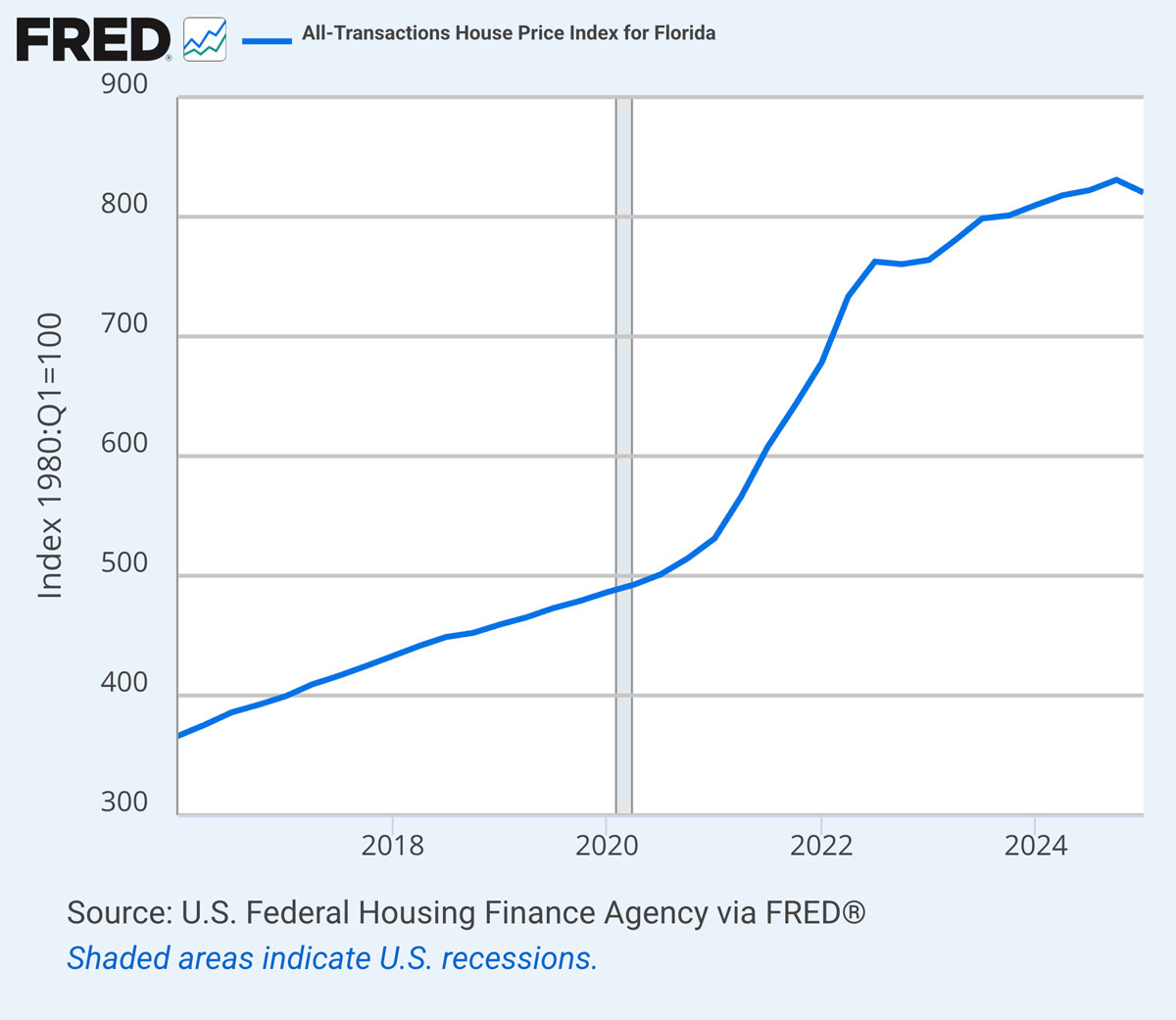
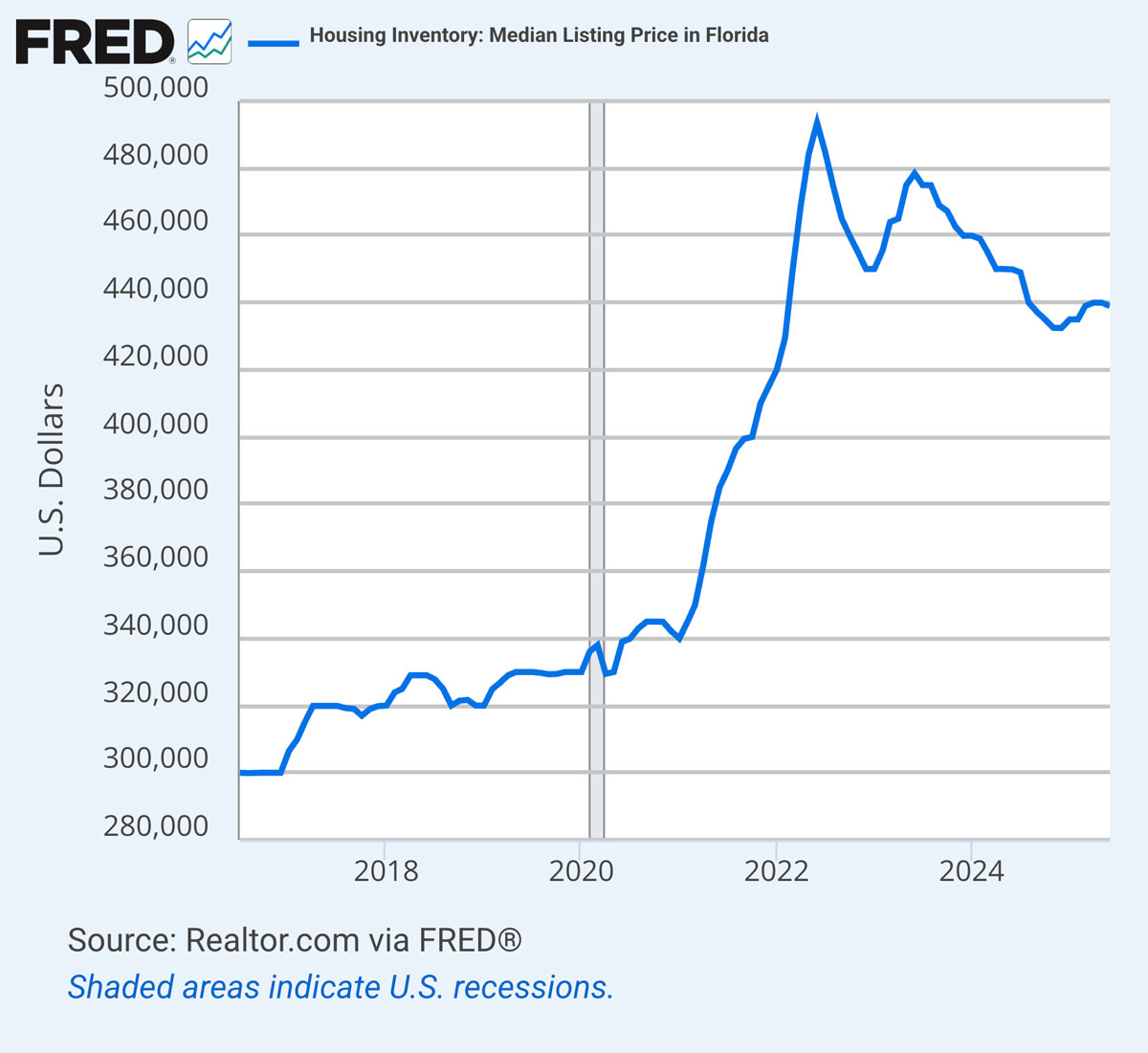
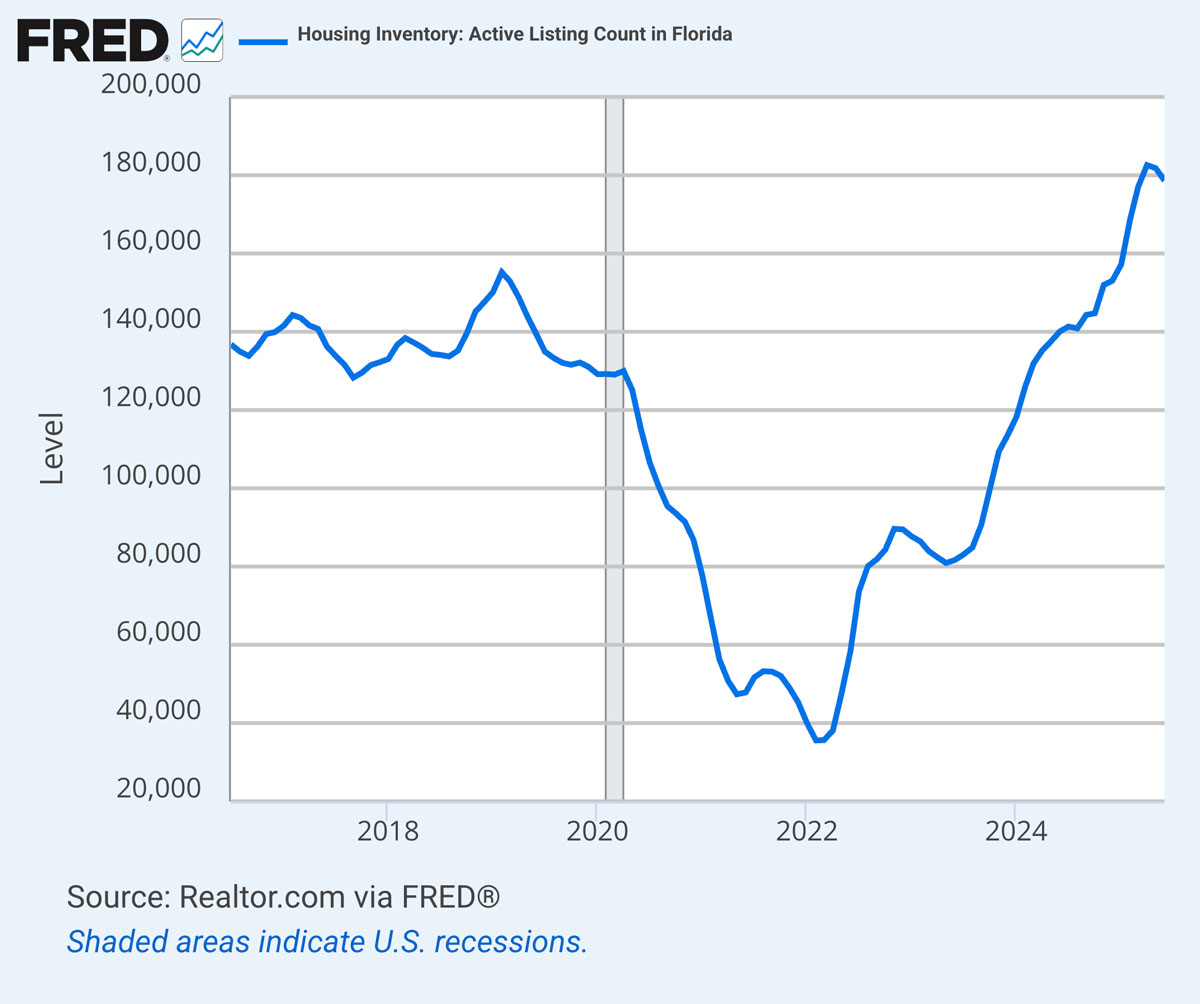
The three charts below clearly demonstrate the strong historical growth of Florida’s real estate market. They reveal a consistent upward trajectory in home prices since 2016.
Housing Price Index
The Florida Housing Price Index has shown a significant upward trend, reflecting strong growth in home prices over the years. Starting from an index value around 264 at the end of 2016, the index rose steadily through the late 2010s and into the early 2020s, reaching a peak above 830 by late 2024. This growth corresponds to a robust housing market driven by high demand and limited supply. However, in early 2025, the index experienced a slight decline to about 820 by Q1, indicating a modest cooling in price growth. Despite this recent dip, overall home prices in Florida remain substantially higher than in 2016, with an average annual growth rate around 5.2%, showcasing the market’s long-term strength and resilience amid cyclical adjustments and changing economic conditions.
Median Listing Price
The median listing price of homes in Florida has generally trended upward, reflecting strong housing demand overall. In October 2016, the median sales price for single-family homes was around $220,000, with steady increases in subsequent years driven by constrained inventory and rising buyer interest. By early 2025, the median listing price had risen significantly, reaching approximately $439,000 as of June 2025. However, recent months have seen some cooling, with price reductions in parts of the state due to rising home inventories and shifting market dynamics. Despite this, Florida’s median listing price remains substantially higher than in 2016, illustrating strong long-term appreciation.
Active Listing Count
Since 2016, Florida’s active listing count has seen considerable fluctuations, with notable growth in recent years. From very low inventory levels during the 2021-2022 housing shortage, active home listings surged starting in late 2022, leading to a significant buildup of unsold homes on the market. As of mid-2025, active listings in Florida reached record highs not seen since data tracking began in 2016, with numbers around 178,000 listings by June 2025. This surge represents approximately a 30-40% increase compared to the pre-pandemic years 2018 and 2019, reflecting a market shift caused largely by reduced buyer demand due to high prices and rising mortgage rates. Several Florida metropolitan areas such as Tampa, Orlando, Jacksonville, and Sarasota experienced inventory increases ranging from about 30% to 80% compared to previous years, contributing to a buyer-friendlier environment after the previous tight market conditions.
Looking Ahead
While some uncertainty is always present in real estate, the fundamentals in Sarasota remain solid. The city’s economy, tourism industry, and quality of life factors provide a strong foundation for long-term growth.
For potential buyers and sellers, the best approach is to engage with knowledgeable luxury real estate professionals and focus on personal goals rather than reacting to headlines. Sarasota’s real estate market is dynamic, and understanding the full picture will help both buyers and sellers make informed decisions that align with their needs.